Automatic Adjustment of Objective Property Values in Greece
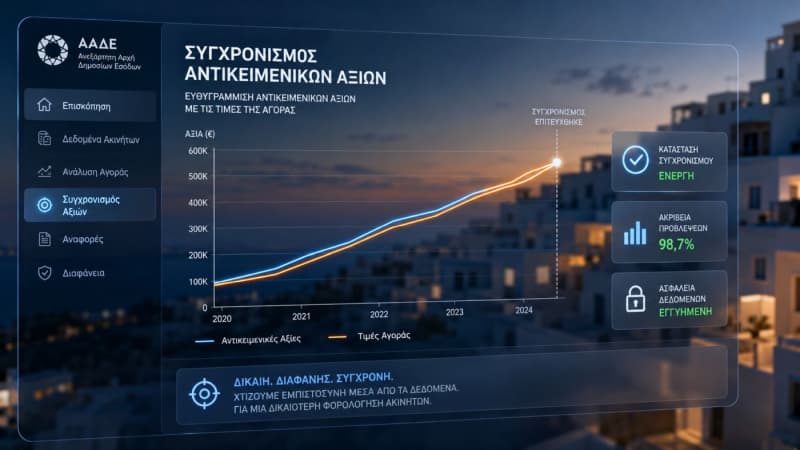
The Greek real estate market is undergoing a structural transformation with the planned implementation of an automated information system for dynamic objective property value adjustments. This major reform replaces the decades-old practice of periodic, static administrative appraisals with a modern valuation model designed to align statutory tax values with actual open-market transaction prices. Because this transition will directly influence property transaction closing costs and annual tax assessments, property owners and prospective investors must understand how the new system operates.
1. Shift from Static Revisions to Dynamic Appraisals
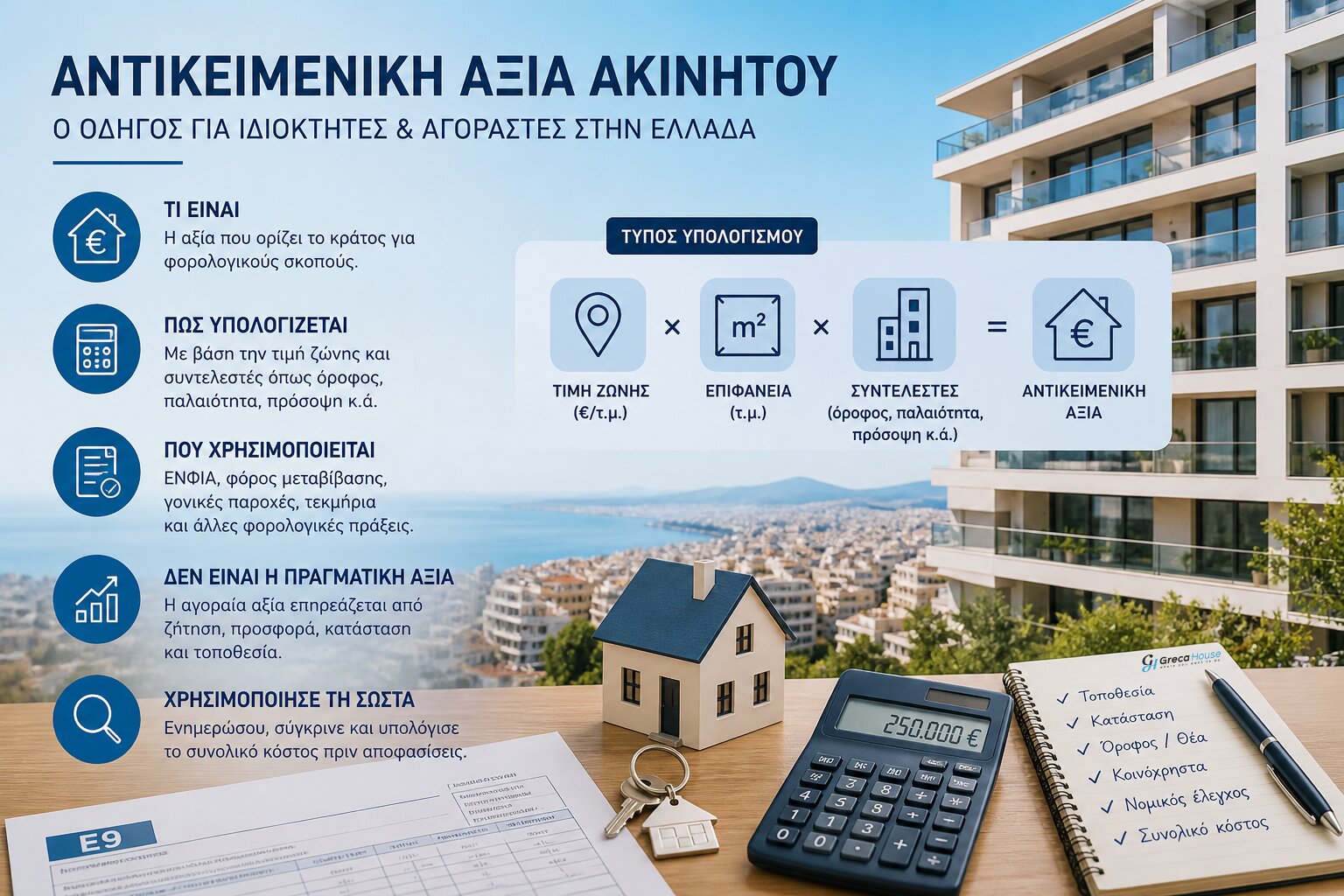
Historically, Greece's administrative zone prices (timi zonis) were updated through periodic ministerial decrees at irregular intervals, leading to substantial disparities between official tax valuations and actual commercial selling prices. When real estate markets experienced rapid capital appreciation, static objective values remained artificially low; conversely, during market corrections, property owners faced tax assessments based on outdated, inflated valuations.
The upcoming Mass Valuation Information System for Real Estate fundamentally modernizes this framework. By leveraging advanced statistical modeling and machine learning algorithms, objective property values will dynamically track real-world market movements. When transaction prices in a specific municipality rise, official tax zone rates will adjust upward automatically, ensuring a fair, transparent, and accurate fiscal baseline.
2. The Role of MIDA, the Land Registry, and Valuemaps
The technical feasibility of automated mass valuations relies on the consolidation of Greece's core digital registries. The launch of the Property Ownership and Management Registry (MIDA) by the Independent Authority for Public Revenue (AADE), combined with its integration with the Hellenic Cadastre (Land Registry), creates a unified, tamper-proof real estate database.
For the first time, Greek authorities are centralizing comprehensive physical and legal property characteristics—including exact square footage, construction age, primary usage, historical contract transaction prices, and declared rental income—into a single digital ecosystem. Simultaneously, the interactive valuemaps.gov.gr platform serves as a public geospatial portal, displaying current zone prices and adjustment coefficients across the entire country with absolute transparency.

3. Data Sources Powering the Valuation Algorithm
The mass valuation algorithm operates by continuously synthesizing verified, real-time market data from authoritative public and financial institutions. The primary data streams feeding the valuation model include:
- Notarial Transaction Records: Actual purchase contract prices logged digitally via the AADE myPROPERTY portal and the Land Registry.
- Bank Mortgage Appraisals: Certified property valuations conducted by independent appraisers during mortgage underwriting.
- Rental Lease Declarations: Monthly rental income reported electronically on tax declarations, indicating neighborhood yield dynamics.
- Bank of Greece Real Estate Indices: Official macro-statistical data tracking residential and commercial capital value appreciation.
- Professional Real Estate Metrics: Verified market supply, demand trends, and asking price data from certified real estate organizations.
4. Why the Valuation Gap Developed
The last nationwide comprehensive revision of Greek objective property values was conducted in 2021 (effective January 1, 2002). Since that revision, the Greek property sector has experienced remarkable growth. In high-demand urban centers across the Athens metropolitan area, the Athens Riviera, and prime holiday island destinations, commercial selling prices have surged, frequently exceeding objective tax valuations by 40% to 50%.
While this gap temporarily buffered buyers from higher property transfer taxes, it created structural distortions in wealth reporting and resulted in uneven property tax burdens across different municipalities. Dynamic automated adjustments aim to eliminate these distortions, fostering a mature and transparent investment landscape.
5. Impact on Property Taxes, Buyers, and Owners
The activation of automated valuation adjustments will have an immediate impact on real estate taxation. In neighborhoods where market prices have appreciated significantly, the upward convergence of objective values will lead to corresponding adjustments in several statutory taxes and fees, including:
- Real Estate Transfer Tax (RETT / ΦΜΑ at 3%).
- Annual Property Tax (ENFIA).
- Statutory imputed living expense thresholds (tekmiria) used for income tax assessments.
- Inheritance, parental donation, and property gift taxes.
- Municipal taxes and administrative property regularization fees.
Conclusion
The transition to an automated, dynamic valuation system marks a major milestone in modernizing the Greek real estate market. For property owners and international investors, navigating this evolving tax environment requires proactive financial planning and expert local guidance. To learn more about total acquisition expenses, read our detailed guide on property buying costs in Greece.