Property Valuation in Greece: Why It Is Essential for Buyers and Sellers
Professional property valuation is one of the most critical and foundational advisory services provided by Greca House. It is the objective process that safeguards real estate investments, making it indispensable whether you are negotiating to buy, sell, or lease residential or commercial real estate in Greece. Below is an authoritative guide to property valuations, explaining why an appraisal is essential, when it is required, and the scientific methodology behind determining true market value.
What is a Professional Property Valuation?
A property valuation is the rigorous, data-driven process of determining the accurate commercial market value of a real estate asset, conducted by a certified appraiser. This comprehensive analysis incorporates legal, zoning, architectural, and financial data —including micro-location, square footage, internal layout, building age, maintenance status, energy efficiency, and local appreciation potential. Valuation methodologies apply across the entire real estate spectrum: from urban residential apartments and luxury villas to commercial offices, retail spaces, industrial warehouses, and development land.
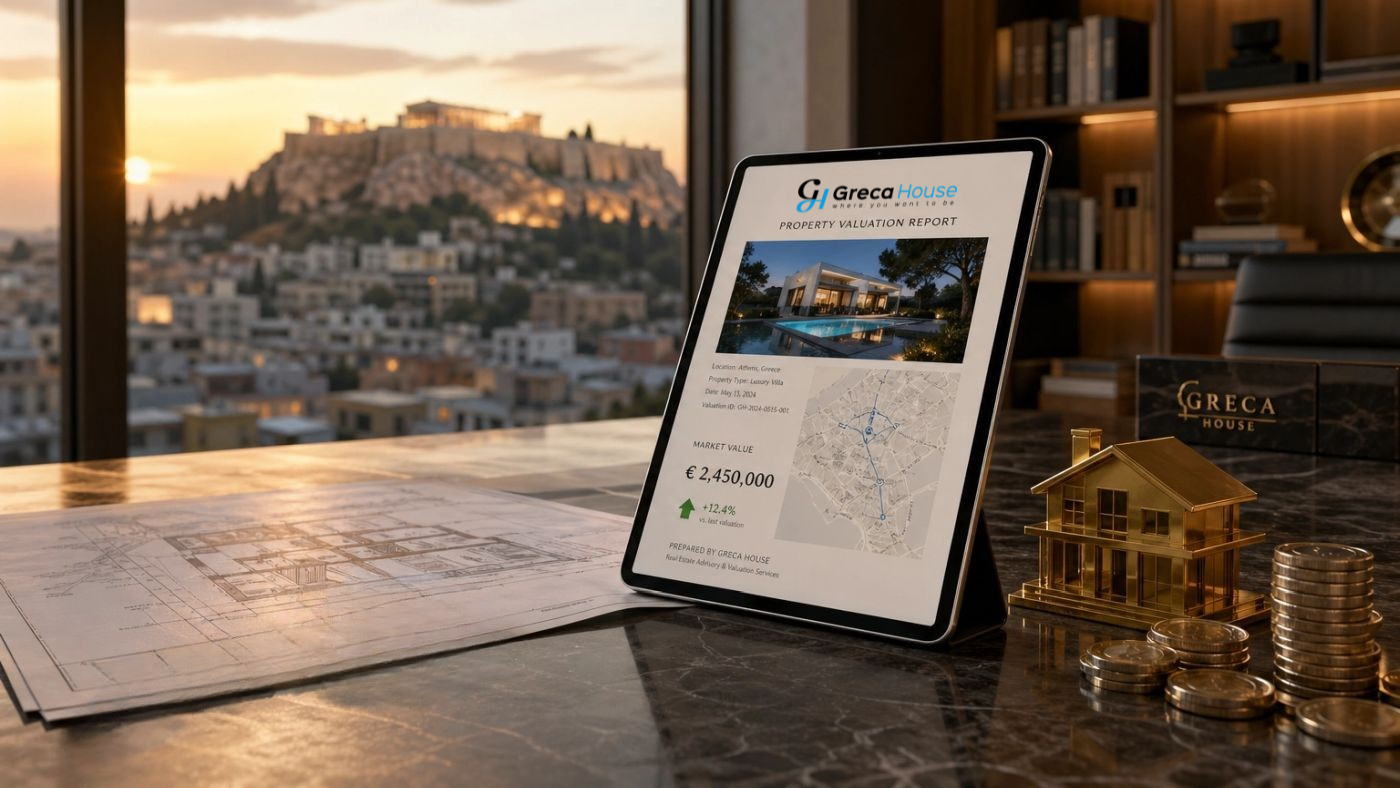
Why is Property Valuation Essential?
Securing an official, professionally documented appraisal report is essential for several strategic, legal, and financial reasons:
1. Security When Buying Property
For investors navigating the process of buying property in Greece, an independent appraisal provides an unblemished, accurate picture of true asset value. This protects buyers from paying inflated prices and serves as a powerful negotiation tool during closing discussions.
2. Realistic Pricing for Sellers
For property owners preparing to sell, a valuation establishes the optimal, competitive asking price. Pricing a property correctly from the outset accelerates the sales timeline, attracts qualified buyers, and prevents the asset from becoming undervalued or stagnant on the market.
3. Bank Financing and Mortgages
Financial institutions and commercial banks providing real estate financing and mortgages strictly require an official appraisal by an accredited valuator. The valuation confirms that the property's market value adequately covers the requested loan amount, mitigating credit risk for the lender.
4. Fair Taxation and Objective Values
An official valuation is frequently utilized as documentation to verify, calculate, or contest property-related tax assessments, ensuring property owners are taxed fairly based on realistic market parameters.
5. Insurance Coverage and Claims
Determining the precise replacement and reconstruction cost of a building is vital for underwriting accurate property insurance policies. Insurance companies rely on professional appraisals to calculate appropriate premiums and ensure fair claim settlements in the event of damage.
6. Inheritances and Estate Division
In cases of estate inheritances, corporate restructuring, partnership dissolutions, or legal disputes, a valuation guarantees an equitable, transparent, and legally defensible division of property assets among beneficiaries.

What are the Stages of the Property Valuation Process?
A comprehensive property appraisal in the Greek market follows a standardized, internationally recognized methodology, executed across five rigorous stages:
- Data Collection and Legal Verification: The appraiser compiles all essential legal and technical documentation, including property title deeds, architectural floor plans, building permits, and records from the Hellenic Land Registry.
- On-Site Physical Inspection: A thorough on-site inspection (autopsy) is conducted across the interior and exterior of the property. The appraiser records structural condition, material quality, layout ergonomics, natural lighting, views, and any necessary repair requirements.
- In-Depth Market Analysis: The valuator investigates current local market trends, evaluates active listings of comparable properties in the neighborhood, and analyzes verified historical transaction data for closed sales of similar assets.
- Applying Valuation Methodologies: The appraiser selects the appropriate valuation models in accordance with European and international standards (TEGoVA): the Sales Comparison Approach (analyzing comparable market transactions), the Income Capitalization Approach (evaluating rental yield and net operating income), or the Cost Approach (calculating land value plus depreciated reconstruction cost).
- Compiling the Valuation Report: The appraiser issues a comprehensive, legally certified valuation report detailing all mathematical calculations, photographic evidence, comparative market analysis, and the final certified market value of the property.
Conclusion: The Key to Confident Real Estate Decisions
Professional property valuation is an indispensable tool for homebuyers, sellers, investors, and property owners seeking transparency and security in their long-term property management. It provides the authoritative documentation necessary to eliminate guesswork, ensuring every real estate transaction is executed with maximum financial success.
READ ALSO: Property Valuations: The First Step Toward a Secure and Profitable Investment