Buying an Apartment in Greece: How to Make the Right Choice
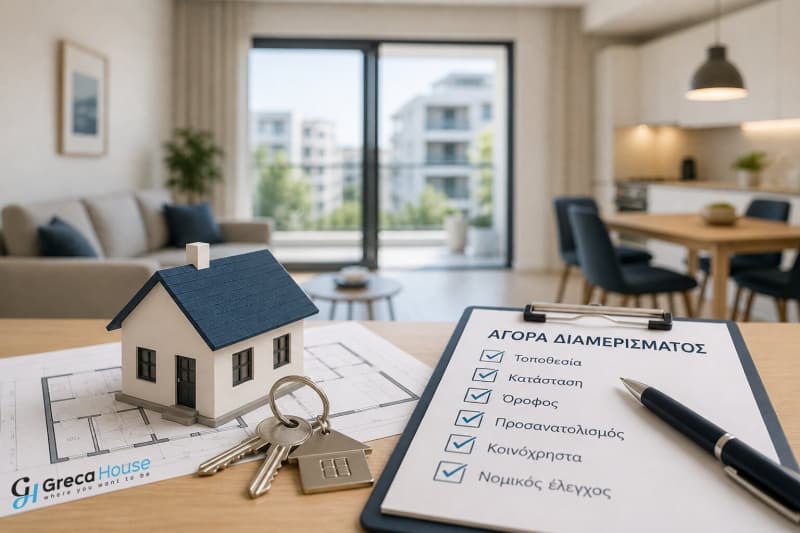
Acquiring an apartment in Greece is a major financial and personal milestone. However, many prospective buyers focus almost exclusively on surface aesthetics and asking prices, overlooking crucial factors that dictate the long-term commercial value and daily livability of the property. In reality, the most serious pitfalls usually emerge after the deed is signed, when hidden structural, legal, or building management issues come to light.
At Greca House, we treat property acquisition as a strategic decision that demands structured analysis and professional methodology. This comprehensive guide is designed to help you evaluate every prospective apartment holistically—assessing building infrastructure, operational costs, layout efficiency, and long-term capital appreciation across the Greek real estate market.
1. Start Your Evaluation with the Building, Not Just the Apartment
A frequent error among property seekers is evaluating the apartment's interior in isolation while ignoring the condition of the overall residential building (polykatoikia). The communal infrastructure and general maintenance of the building directly influence your property's current market value and define your daily living experience.
During your viewings, inspect the main entrance, elevator, stairwells, and external facades. Visible wear, dampness, or neglected common areas are clear indicators of poor management and the absence of a reserve sinking fund. Such neglect almost inevitably leads to unexpected, costly special assessments for apartment owners when central systems require emergency repair.
Additionally, it is valuable to understand the ratio of owner-occupiers to tenants within the building. Properties with a steady base of resident owners typically demonstrate superior maintenance standards, more reliable payment of communal expenses, and smoother consensus on necessary building upgrades compared to buildings dominated by short-term rentals or frequent tenant turnover.
2. Floor Level, Natural Light, and Solar Orientation
Two apartments of identical size located in the same neighborhood can command significantly different market values and offer contrasting quality of life depending on their floor level and orientation. Lower-floor units, particularly along high-traffic roads, are exposed to higher urban noise levels, reduced natural daylight, and compromised privacy. Conversely, upper floors provide unobstructed views, superior ventilation, and abundant natural light—factors that directly enhance the property's liquidity and resale valuation.
Solar orientation is a critical energy and financial consideration. A south- or southeast-facing apartment captures optimal winter sunlight, drastically reducing seasonal heating requirements while maintaining a healthy interior microclimate. North-facing or internally obstructed apartments rely heavily on artificial lighting and require more energy for climate control throughout the year.
3. Inspecting Structural and Mechanical Infrastructure
The term "renovated" is often used loosely in real estate listings. In practice, many refurbishments are purely cosmetic—limiting updates to new kitchen cabinetry, laminate flooring, or fresh paint while leaving decades-old structural and mechanical systems untouched.
The most critical inspection points lie beneath the surface: electrical distribution boards and wiring, plumbing and drainage pipes, window frame thermal insulation, and terrace waterproofing. Aging internal systems represent the greatest financial risk for future repairs that can disrupt your investment budget.
For buildings constructed three or four decades ago, commissioning a technical inspection by an experienced civil engineer or architect before signing any binding agreement is essential. Professional due diligence ensures your investment is structurally sound and provides substantial leverage during price negotiations.
4. Conduct Multiple Viewings at Different Days and Times
A single inspection, no matter how thorough, provides only a snapshot of the neighborhood and property dynamics. Traffic volume, street noise, and parking availability fluctuate dramatically throughout the day and week.
We recommend visiting a prospective property at least three times: on a weekday morning to assess commuter traffic and local school activity, in the afternoon to evaluate natural solar orientation, and on an evening or weekend to observe neighborhood noise levels, parking ease, and overall security. These practical insights are never reflected in listing details, yet they define your daily residential experience.
5. Operating Costs and Energy Efficiency Ratings
The purchase price is only the initial component of real estate financial planning. Recurring operating expenses—including monthly communal maintenance fees, seasonal heating and cooling costs, and annual property taxes (ENFIA)—significantly impact the long-term net yield and affordability of your home.
Apartments in older buildings relying on inefficient central oil heating or lacking thermal facade insulation and double-glazed windows incur disproportionately high utility bills. Before making an offer, request the previous year's communal expense statements, verify the heating infrastructure, and review the Energy Performance Certificate (PEA). A higher energy efficiency class translates into thousands of euros in utility savings over a decade.
6. Layout Ergonomics Versus Nominal Square Meters
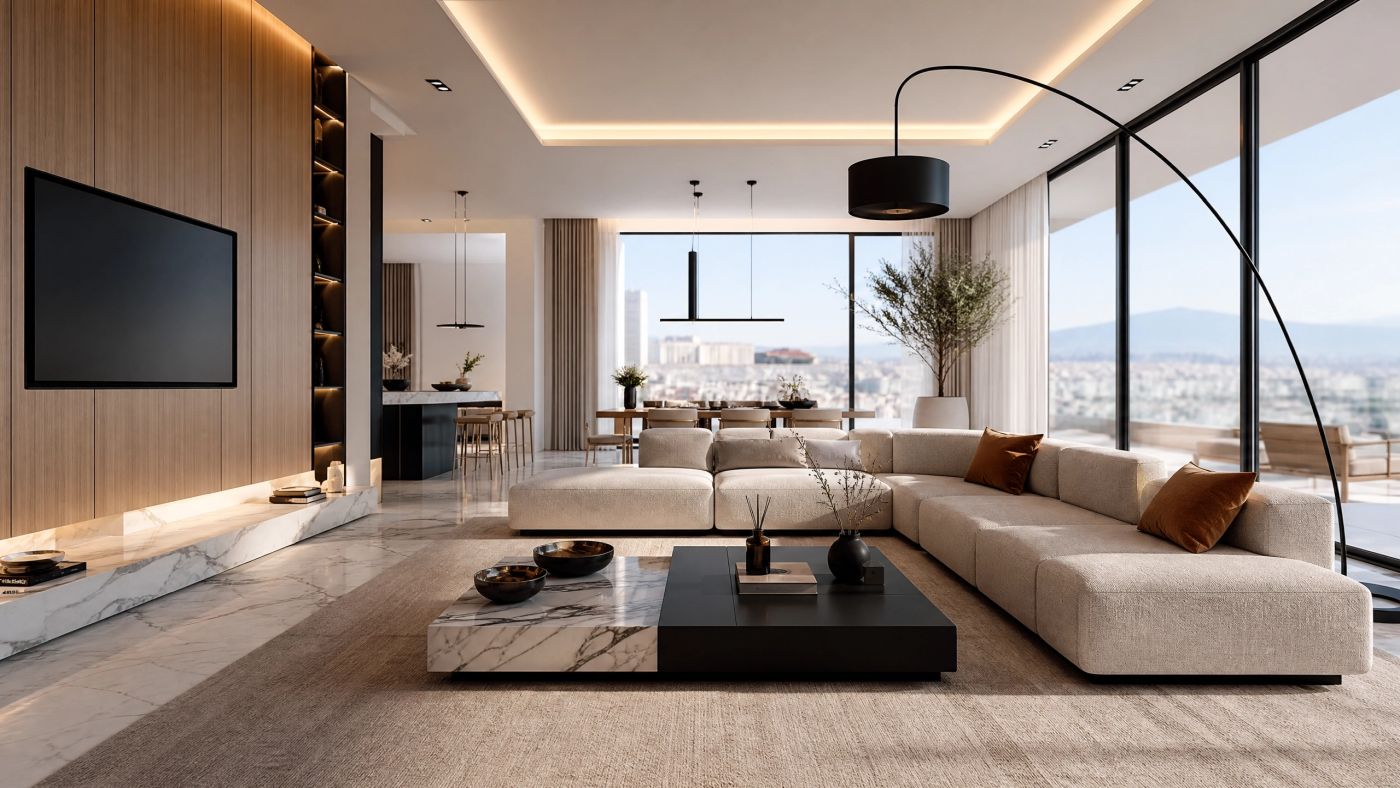
Evaluating an apartment solely by its total square meters is a common trap. Nominal floor area does not guarantee comfort if the architectural layout is outdated. A 100 sq.m. apartment featuring long, dark corridors, awkward room proportions, and insufficient storage can offer less usable living space than an intelligently designed 85 sq.m. residence.
During your walkthrough, analyze spatial flow and functional ergonomics. Check whether bedroom dimensions accommodate standard furniture and built-in wardrobes comfortably, ensure kitchen counter space is practical for daily meal preparation, and confirm that entertaining areas are distinct from private living quarters. Layout efficiency governs daily comfort and interior design flexibility.
7. Rigorous Legal and Urban Planning Verification
Legal and technical compliance forms the non-negotiable foundation of a secure real estate transaction. Issues such as unpermitted construction, discrepancies between actual dimensions and approved planning office drawings, outstanding mortgages, or liens cannot be detected through visual inspection.
Engaging a specialized real estate attorney to conduct thorough title searches at the Land Registry (Ktimatologio) and Mortgage Registry, alongside a civil engineer to verify the Building Electronic Identity (Ilektroniki Tautotita Ktiriou), ensures that the property transfers free of encumbrances and planning violations. Never disburse any deposit funds until these preliminary checks are successfully concluded.
8. Balancing Value and Price in Negotiations
The lowest price does not automatically represent the best real estate opportunity. When an apartment is offered at a price significantly below neighborhood market averages, there is almost always an underlying reason: structural defects, an unfavorable micro-location, accumulated communal debts, or legal disputes among co-owners.
Your objective should be identifying properties that offer an exceptional balance of quality, location, and future appreciation potential. A fairly priced residence in a well-maintained building within a developing neighborhood represents a far more secure and profitable capital placement than a discounted property that demands continuous capital injection and suffers from low liquidity.
Conclusion
Successfully buying an apartment in Greece requires methodical preparation, strategic analysis, and expert verification. The factors that secure property value lie beyond surface impressions. By thoroughly evaluating the residential building, layout ergonomics, mechanical infrastructure, operating expenses, and legal cleanliness, you protect your capital and acquire a home that delivers enduring satisfaction.
At Greca House, we combine deep expertise in the Athens and broader Greek real estate markets with transparent, end-to-end advisory services. Browse our curated portfolio of properties for sale and contact our advisory team to structure your property acquisition with confidence and professional precision.