Renovate 2026: The Complete Guide to Greece's New Property Subsidy Program
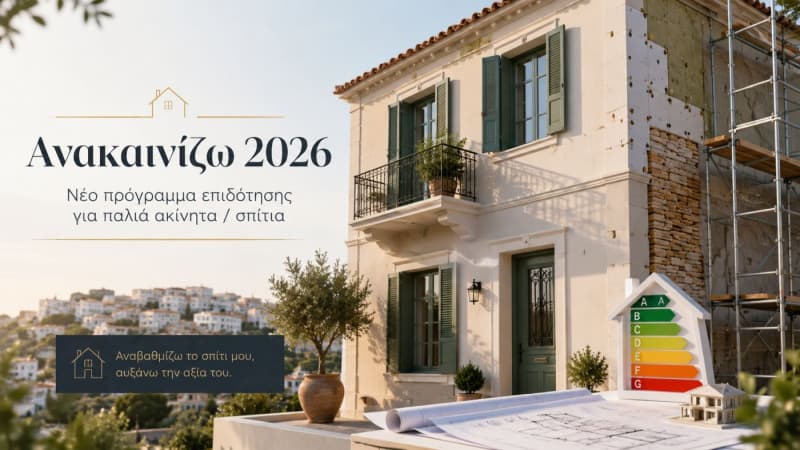
In recent years, many property owners across Greece have postponed essential home renovations due to rising construction costs. Increasing prices for building materials, labor, and energy systems have made upgrades challenging, leaving numerous older residential properties empty or in deteriorating condition.
At the same time, the Greek real estate market faces a critical challenge: a constrained supply of quality housing, particularly in major urban centers such as Athens and Thessaloniki. This shortage of available homes puts upward pressure on rental prices and makes finding suitable housing increasingly difficult for thousands of households.
The new 'Renovate 2026' subsidy program emerges as a direct solution to both challenges. On one hand, it provides substantial financial support to property owners by covering up to 95% of renovation expenses. On the other hand, it aims to reactivate thousands of dormant or outdated homes, bringing them back into the active housing market.
In this comprehensive guide, we examine who is eligible for the scheme, which renovation works are funded, and how property owners can strategically leverage the program to maximize their real estate investment.
What is the 'Renovate 2026' Program and Its Strategic Goals
The 'Renovate 2026' initiative is a modern state subsidy program designed to upgrade older residential properties, specifically targeting homes that are currently underutilized or require significant structural and functional improvements.
With a total state budget of approximately 500 million euros, the program sets an ambitious goal to renovate up to 20,000 residential properties across Greece. Subsidy rates range from 70% to 95% of eligible costs, with the maximum funding limit per property reaching approximately 36,000 euros.
Unlike earlier energy-focused initiatives, the new program places primary emphasis on practical, structural repairs and general maintenance, rather than restricting funds exclusively to green energy upgrades. This shift addresses the real-world maintenance requirements of Greece's aging residential housing stock.
When Does the Program Launch and How to Apply
The program is scheduled to launch around May with the opening of a dedicated digital application platform on gov.gr. The application workflow is fully digital and streamlined, yet it demands thorough and timely preparation. Applicants must gather their property tax records, income verification documents, and a clear technical specification of the proposed renovation works.
Because state-subsidized property programs experience high public demand, preparing a complete application file before the official platform launch significantly increases the probability of approval.
Who is Eligible for the Renovation Subsidy
The 'Renovate 2026' scheme is directed primarily toward low- and middle-income households, offering capital support to owners who would otherwise struggle to self-fund an extensive property overhaul.
Priority scoring and enhanced subsidy rates are reserved for specific social categories, including individuals with disabilities, families with three or more children, single-parent households, and young adults aged 25 to 35. Furthermore, properties located in island and mountainous regions qualify for increased funding percentages.
Income criteria align with broader Greek housing policy thresholds, ensuring that the pool of eligible beneficiaries remains wide and inclusive across urban and regional areas.
Which Properties Qualify for the Scheme
The program applies to older residential properties, regardless of whether they are currently vacant or occupied. This inclusive approach marks a major departure from past programs that were restricted entirely to closed homes. Eligible properties include both primary residences occupied by their owners and apartments intended for long-term rental. The maximum surface area threshold is capped at 120 square meters, covering the vast majority of standard urban apartments and family houses in Greece.
Eligible Works: What Expenses Are Covered
The core philosophy of the program centers on restoring functional livability to older buildings. Approximately 80% of the total budget is allocated to practical building repairs and technical installations. Eligible expenses include complete kitchen and bathroom overhauls, plumbing and electrical rewiring, floor repairs, and general interior restorations that make the home safe and modern.
The remaining 20% of the funding is designated for targeted energy efficiency improvements. These include window frame replacements with double or triple glazing, thermal insulation, and heating or cooling system upgrades. Energy interventions are subsidized up to approximately 300 euros per square meter, combining with repair funds to reach the 36,000 euro maximum allocation per property.
The Essential Requirement for Retaining the Subsidy
To successfully enroll a property in 'Renovate 2026' and secure final subsidy disbursement, owners must adhere to a mandatory condition: following completion of the works, the property must either be occupied as the owner's primary residence or leased out on a long-term rental contract for at least 5 years.
The objective of this mandatory rule is to ensure that subsidized properties remain in the long-term housing market, boosting available residential supply and helping stabilize rental rates. The program acts not only as a renovation grant but as an engine for sustainable urban housing development.
Key Differences From Previous Renovation Programs
The 'Renovate 2026' framework differs substantially from earlier state schemes in both scale and operational focus. The total budget represents a tenfold increase, rising from approximately 50 million euros in older formats to 500 million euros, extending financial aid to tens of thousands of additional property owners.
Furthermore, shifting the funding balance toward structural and functional repairs provides a lifeline for degraded properties that could not benefit from purely energy-centric grants. Finally, allowing occupied homes to participate offers practical support to families seeking to improve their living standards without having to vacate their residences.
Market Impact of 'Renovate 2026' on Greek Real Estate
The implementation of this program is projected to generate immediate, positive momentum across the Greek real estate sector. Reintroducing thousands of newly renovated apartments into the rental and owner-occupier markets will help alleviate housing shortages, particularly in high-demand Athens neighborhoods.
Simultaneously, the overall quality of the country's housing stock receives a vital upgrade. Older apartments that currently lack commercial appeal will be transformed into attractive, functional, and energy-efficient residences. For forward-thinking property buyers and investors, this creates a compelling opportunity to acquire older assets and unlock significant capital appreciation through subsidized modernization.
Strategic Advice for Maximizing Program Benefits
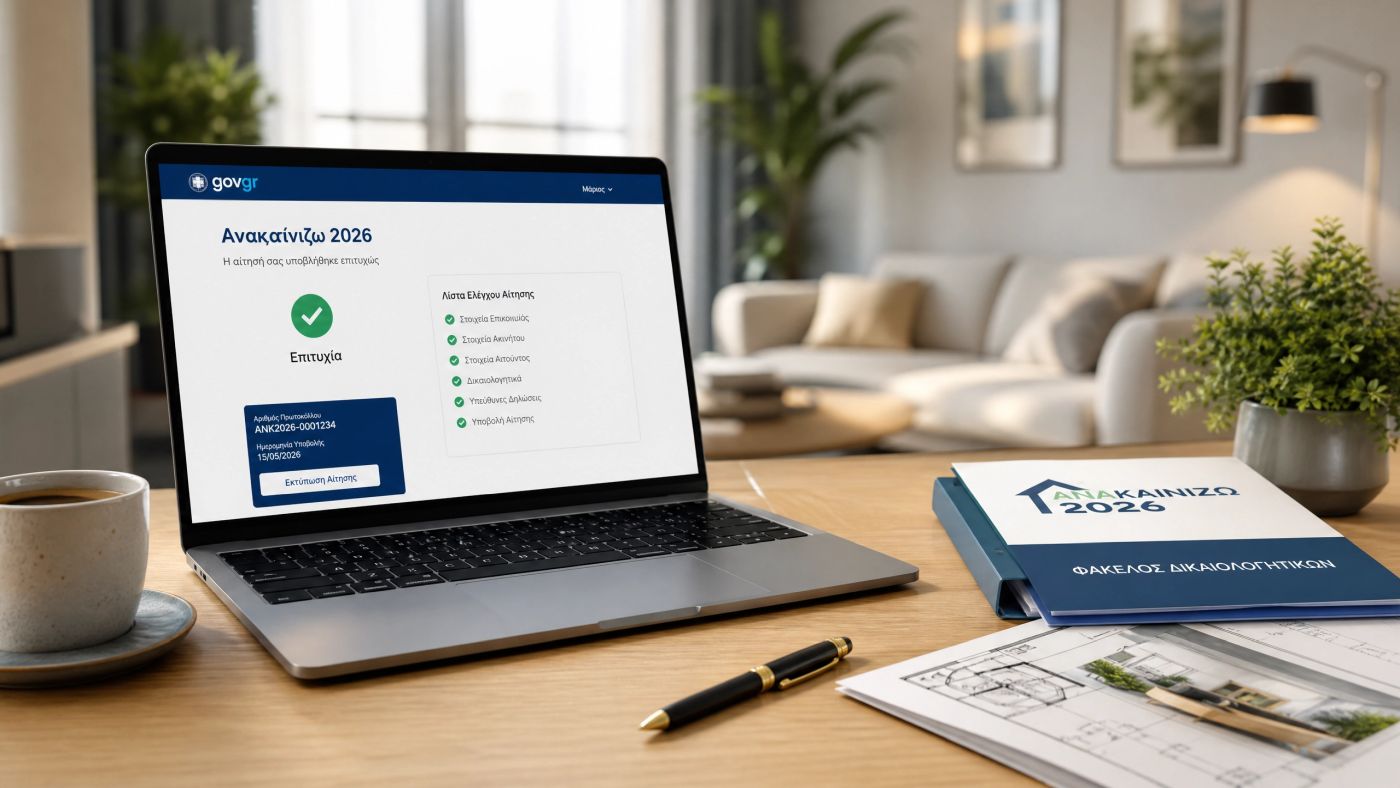
Participating in the program offers exceptional financial leverage, provided it is executed with a clear strategic plan. Success extends beyond application approval to the caliber of technical choices made during construction. The initial step is selecting the right property, as not every building justifies a capital expenditure, even when subsidized.
Owners should prioritize fundamental structural and MEP (mechanical, electrical, plumbing) installations over superficial decorative treatments. Managing the renovation budget rigorously ensures that the state grant covers the maximum scope of works without unexpected out-of-pocket overruns. Professional guidance is essential to turn construction spending into long-term commercial value.
Expert Guidance from Greca House
Greca House, a premier real estate agency in Athens, provides comprehensive advisory services for property owners navigating the subsidy landscape. By analyzing current market data and local neighborhood trends, our team evaluates whether renovating a specific property will yield optimal capital appreciation and rental yield.
We provide strategic counsel to help you avoid common renovation pitfalls and focus on upgrades that genuinely enhance property value. Whether you are upgrading your primary family residence or executing a value-add investment strategy, our expertise ensures your renovated property stands out in the competitive Athenian market.
Conclusion: Is 'Renovate 2026' a True Market Opportunity?
The 'Renovate 2026' subsidy program is a powerful financial tool capable of transforming the functional quality and market valuation of older Greek properties. However, its ultimate success depends heavily on strategic planning and disciplined execution.
For property owners who approach the process with a clear technical and commercial strategy, the scheme represents an outstanding opportunity to modernize residential real estate with minimal personal capital outlay. In today's dynamic property market, strategic renovation is the key to preserving asset value and securing strong future returns.